Research Areas: Polar Meteorology, Extreme Weather, Numerical Weather Modeling Google Scholar CV
Extreme Weather over Antarctica and Beyond
Growing Influence of Atmospheric Rivers
Atmospheric Rivers (ARs) are long, narrow, and transient corridors of concentrated water vapor transport,
often associated with a low-level jet ahead of a cold front and an extratropical cyclone.
They play a significant role in transporting moisture from lower to higher latitudes,
profoundly impacting both mid-latitude and polar regions.
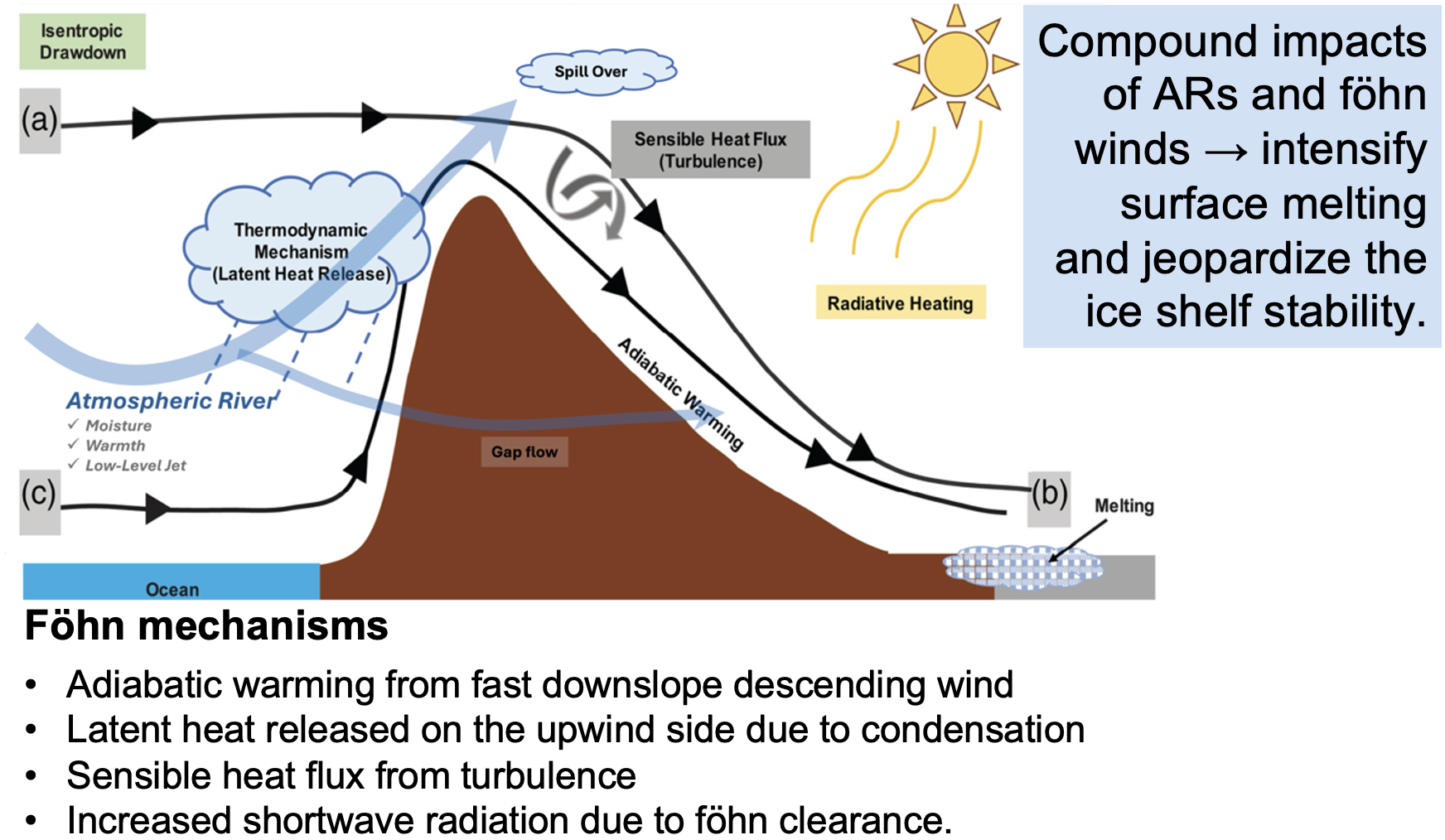
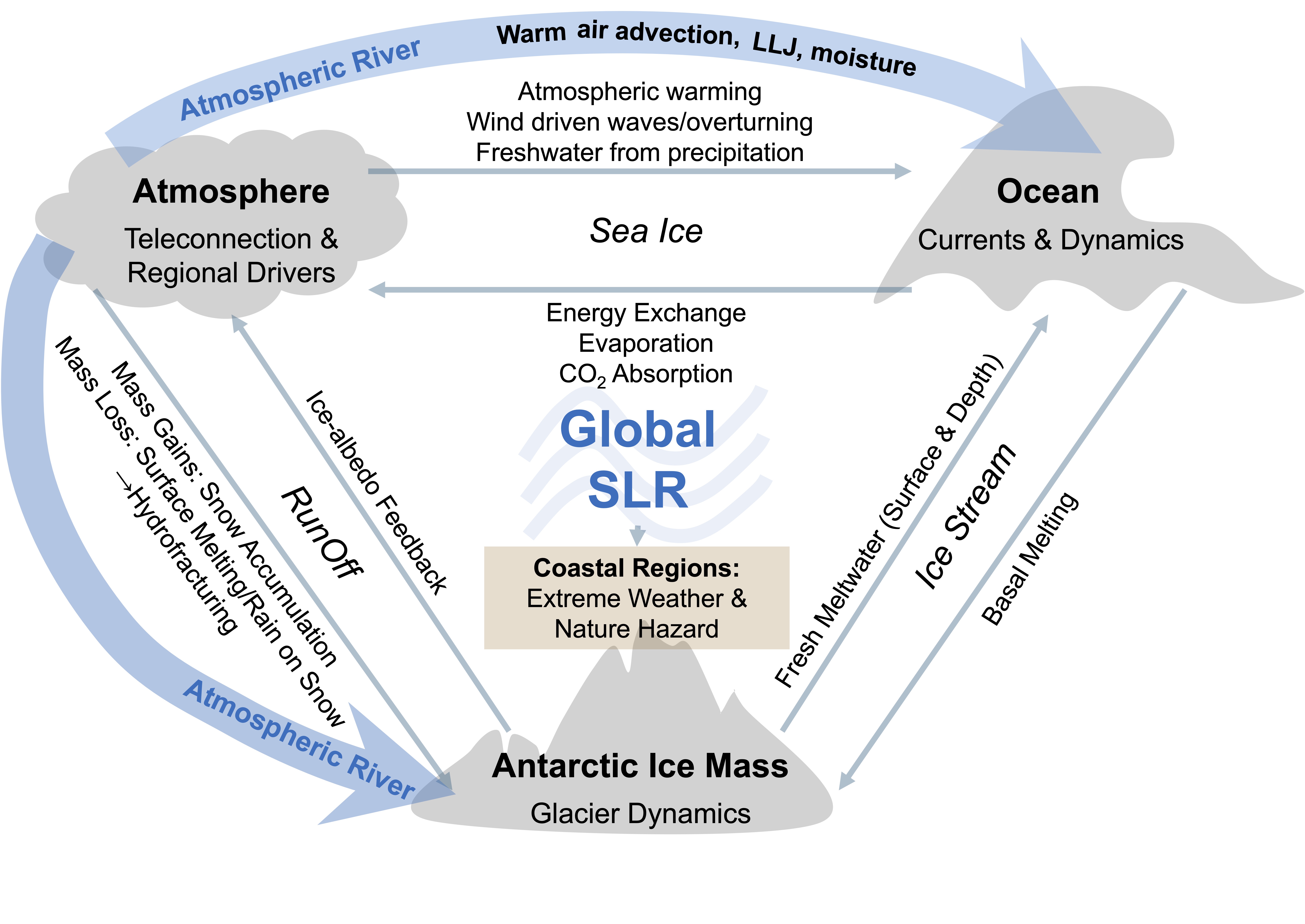
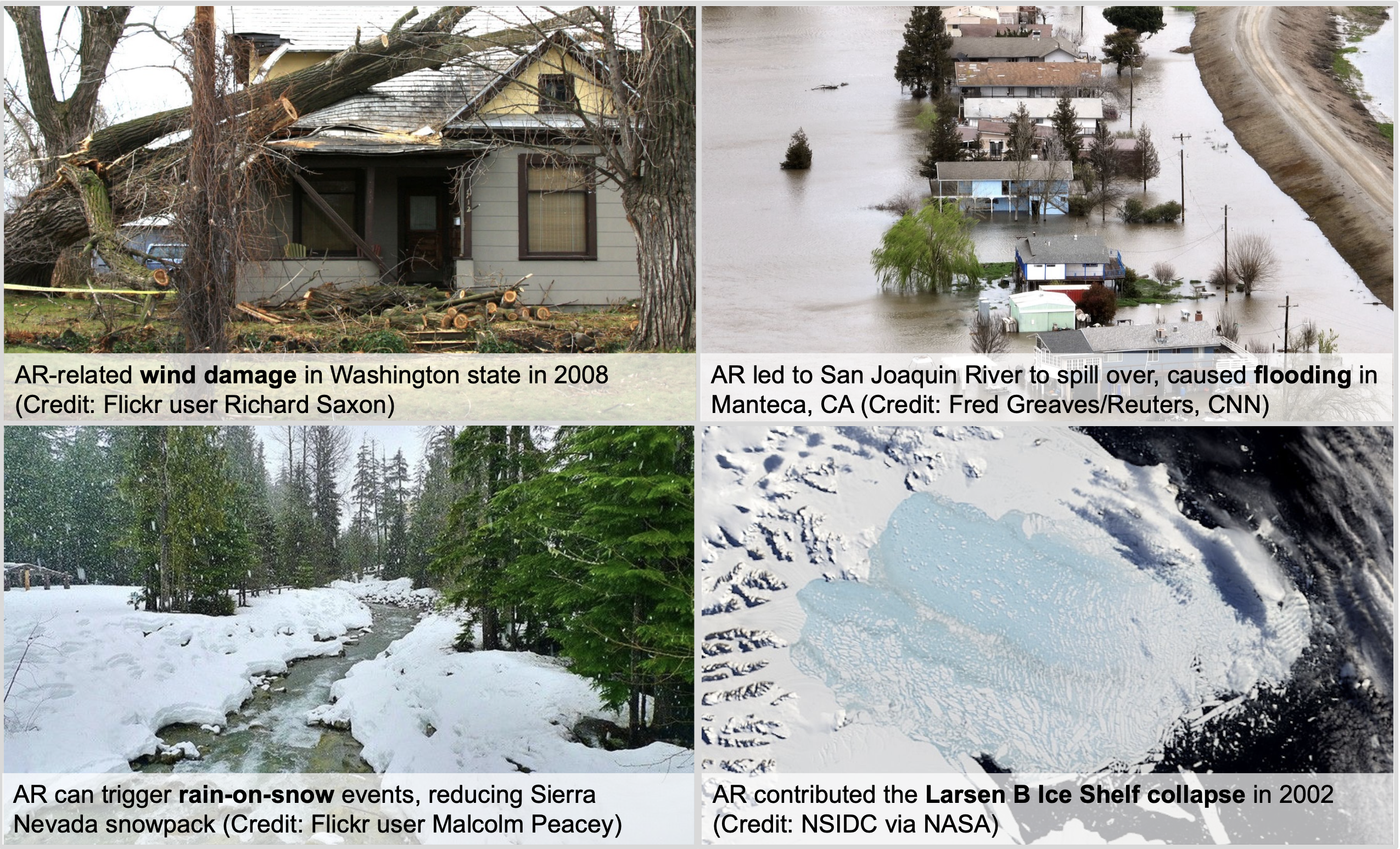
ARs in Antarctica can trigger surface melting, contributing to ice shelf
collapse and threatening ice sheet stability, while extreme snowfall can
offset ice loss. ARs connect different Earth systems by transporting
large amounts of moisture. These complex dynamics create significant uncertainty
in future Antarctic ice mass balance and sea level rise (SLR) projections.
In the western U.S., ARs are vital for water resources and drought relief but have caused over 80% of flood damage
in the past 40 years, with risks increasing in a warming climate. Recent studies also highlight ARs’ impact on water
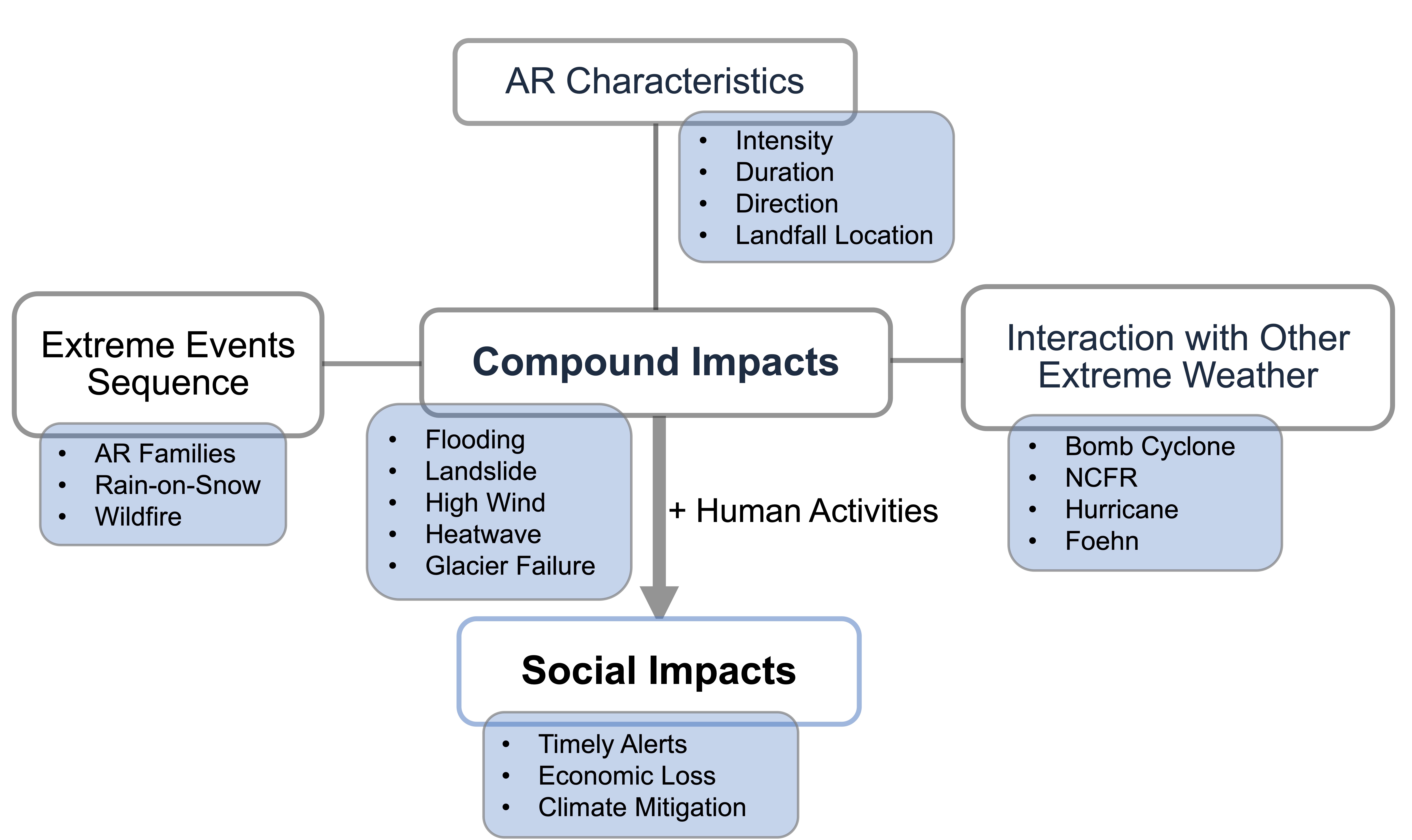
supply and extreme weather in continental interiors. The surface impacts of AR-related extreme weather depend heavily
on the characteristics of the AR, whether it is a singular extreme event or part of a sequence of events, and how it
interacts with pre-existing weather systems.
My research focuses on extreme weather events in Antarctica and beyond, investigating their
dynamic and thermodynamic processes and compound impacts at both global and regional scales.
Drawing on expertise in polar regions and the United States, I aim to address the complex challenges posed by climate variability
and change, particularly in coastal areas vulnerable to sea level rise and extreme weather. By integrating regional climate models,
reanalysis datasets, and satellite and ground-based observations, my research will enhance the understanding of natural hazards
such as flooding, high-wind damage, and glacial failure. Additionally, it will assess the vulnerability of affected regions and
support adaptation efforts in response to climate change.
The Combined Influence of Initial Condition Errors in short-wave troughs (SWTs) and ARs on the AR Forecasts: Applying the Moist Adjoint Error Energy Metric to Diagnose Cases from AR Recon (ONR #N00014-24-1-2754)
#Upstream#SWT
AR-based Probable Maximum Precipitation (PMP) for Oregon (WEST Consultants, Inc.)
#PMP#ClimateChange#FutureProjection
Predecessor Rain Event in the Southern Appalachians Prior to the Hurricane Helene's Landfall (CW3E & NOAA)
#Upstream#PredecessorRain
Investigation of AR-associated Extreme Weathers over Antarctica via High-resolution Simulations and Machine Learning Models (NCAR HPC Exploratory Allocation & CW3E Summer Internship Program)
#AI
Publication Lists
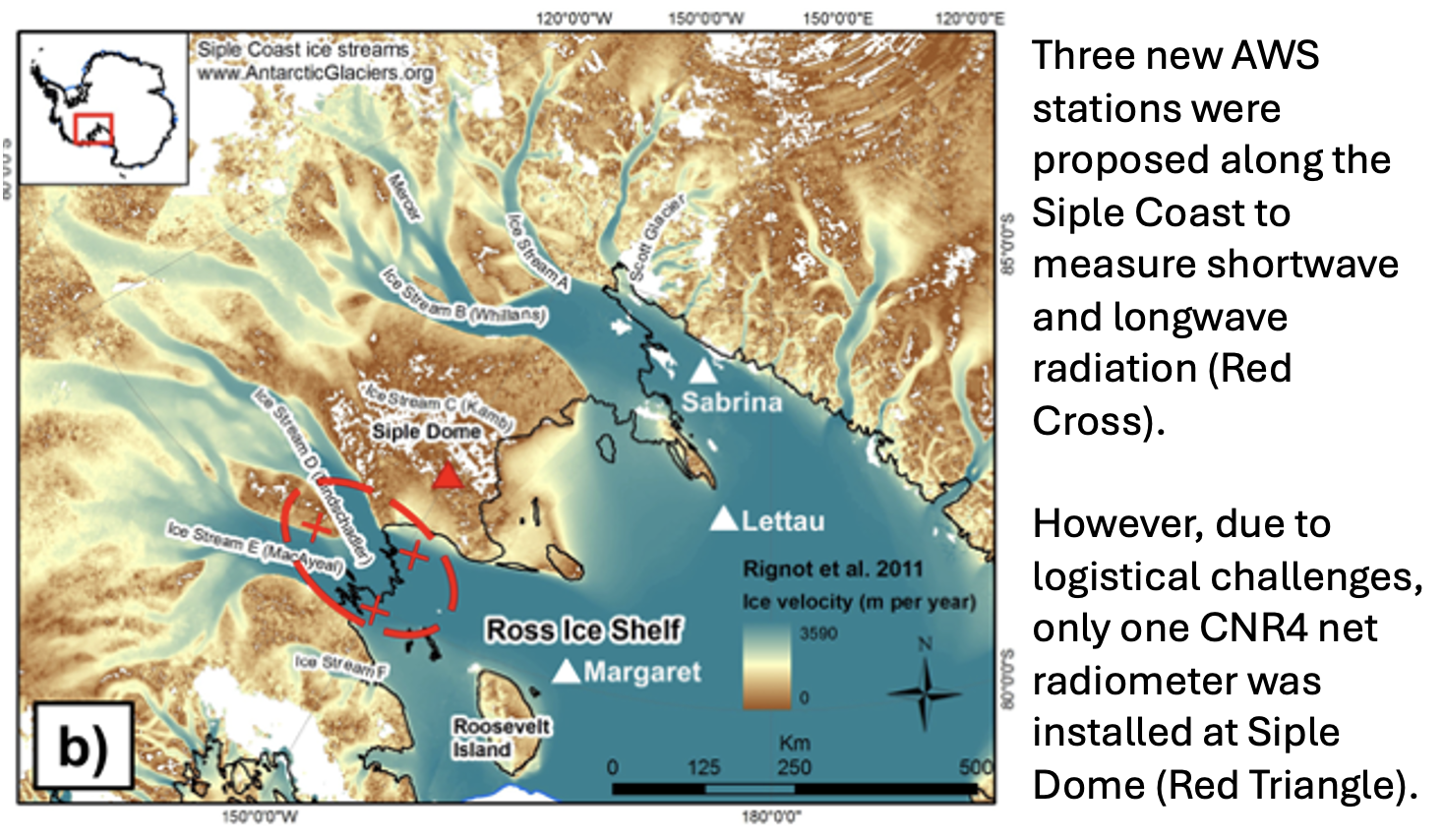
Zou et al. (2026c): "Polar-WRF evaluation at Siple Dome in West Antarctica: Fidelity of a double-moment mixed-phase cloud parameterization" J. Clim., https://doi.org/10.1175/JCLI-D-25-0619.1.
Zou et al. (2026b): "Föhn-induced melting over Larsen C modulated by atmospheric river shape, direction and landfall location." Nat. Commun., https://doi.org/10.1038/s41467-026-71359-2.
Zou et al. (2026a): "Antarctica’s uncertain future: sea-level rise from oceanic and atmospheric forcing, with a focus on atmospheric rivers." Front. Earth Sci. 14: 1761959, https://doi.org/10.3389/feart.2026.1761959.
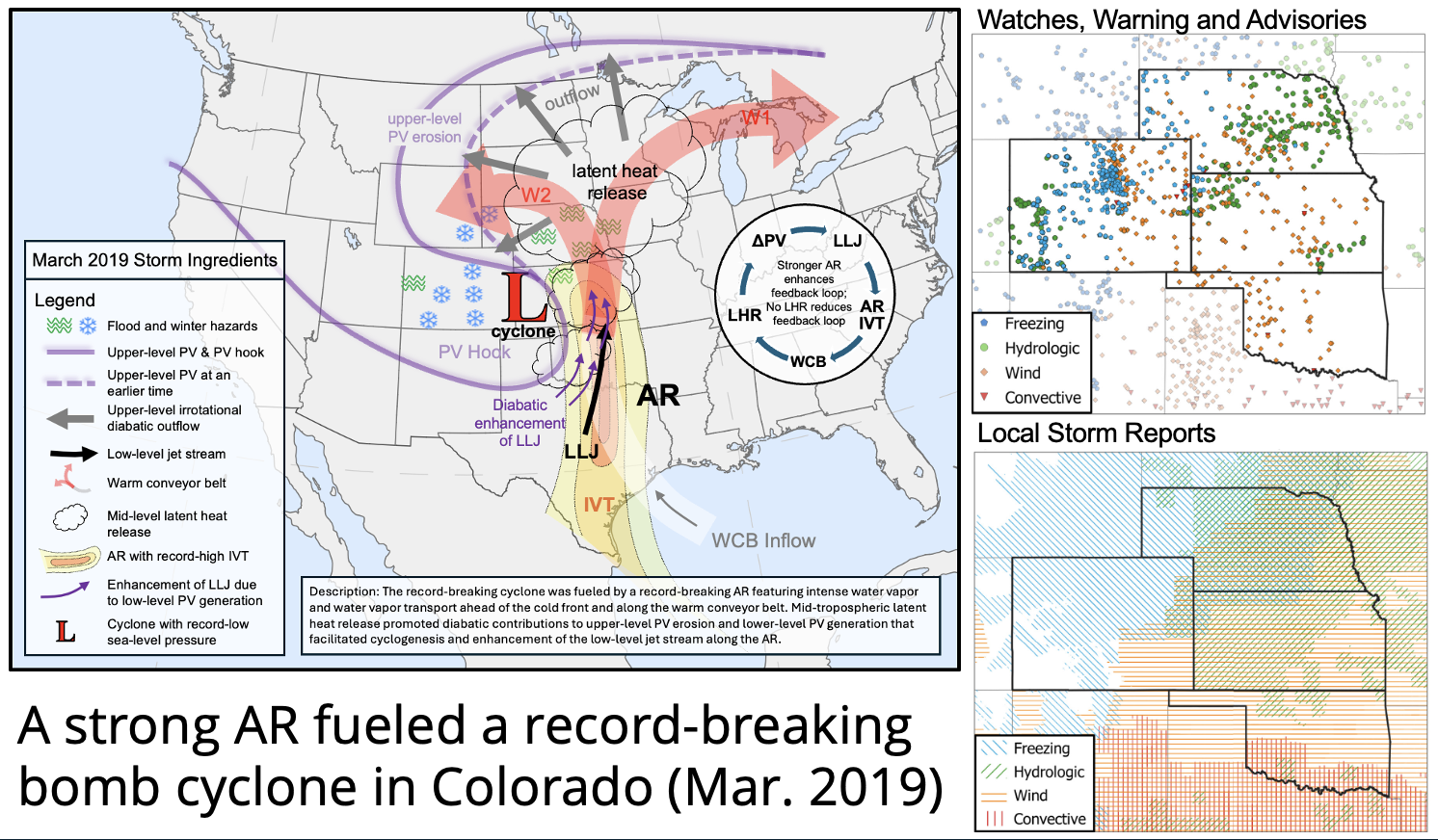
Zou et al. (2025): "A Case Study of an Exceptional Atmospheric River and Explosively Deepening Cyclone over the US Central Plains in March 2019." J. Geophys. Res. Atmos., 130: e2024JD042309, https://doi.org/10.1029/2024JD042309.
Zou et al. (2023b): "Mesoscale and Synoptic Scale Analysis of Narrow Cold Frontal Rainband during a Landfalling Atmospheric River in California in January 2021." J. Geophys. Res. Atmos., 128: e2023JD039426, https://doi.org/10.1029/2023JD039426.
Zou et al. (2023a): "Atmospheric River and Foehn Events: Contribution of Shortwave Radiation and Turbulence." J. Geophys. Res. Atmos., 128: e2022JD038138, https://doi.org/10.1029/2022JD038138.
Zou et al. (2021b): "Major Surface Melting over the Ross Ice Shelf Part I: Foehn Effect." Q. J. Royal Meteorol. Soc., 147: 2874–2894, https://doi.org/10.1002/qj.4104.
Zou et al. (2021a): "Major Surface Melting over the Ross Ice Shelf Part II: Surface Energy Balance." Q. J. Royal Meteorol. Soc., 147: 2895–2916, https://doi.org/10.1002/qj.4105.
Zou et al. (2019): West Antarctic Surface Melt Event of January 2016 Facilitated by Foehn Warming. Q. J. Royal Meteorol. Soc., 145: 687-704, https://doi.org/10.1002/qj.3460.
Zou et al. (2016): Advection errors in an orthogonal terrain-following coordinate: idealized 2-D experiments using steep terrains. Atm. Sci. Let., 17: 243-250, https://doi.org/10.1002/asl.650.
Gan et al. (2026b): "Tibetan Plateau Mountain Wave Simulation using AI-Driven 3D Adaptive Mesh Refinement" J. Geophys. Res. Atmos., 131: e2025JD045585, https://doi.org/10.1029/2025JD045585.
Gan et al. (2026a): "Hymeshai: Deep learning enabled Three-dimensional adaptive mesh generator for high-resolution atmospheric simulations" J. Comput. Phys. 114760, https://doi.org/10.1016/j.jcp.2026.114760.
Lubin et al. (2025): "Arctic Amplification Mechanisms Manifest as a Summertime Radiative Cooling Effect Over the North Slope of Alaska." Atmos. Chem. Phys., 1: 9-13, https://doi.org/10.5194/egusphere-2025-2768.
Clem et al. (2025): "Chapter 7: Meteorology and Climate of Antarctica" in A. Taschetto, T. Ndarana, T. Ambrizzi (Eds.), Meteorology of the Southern Hemisphere, https://doi.org/10.1017/9781009352680.009.
Rowe et al. (2025b): "Comparison of Cloud and Radiation Measurements to Models over the Southern Ocean at Escudero Station, King George Island," J. Geophys. Res. Atmos., 130: e2024JD042787, https://doi.org/10.1029/2024JD042787.
Rowe et al. (2025a): "Observations of Clouds and Radiation Over King George Island and Implications for the Southern Ocean and Antarctica," J. Geophys. Res. Atmos., 130: e2025JD043563, http://doi.org/10.1029/2025JD043563.
Bromwich et al. (2025): "An Updated Reconstruction of Antarctic Near-Surface Air Temperatures at Monthly Intervals Since 1958," Earth Syst. Sci. Data., 17: 2953–2962, https://doi.org/10.5194/essd-17-2953-2025.
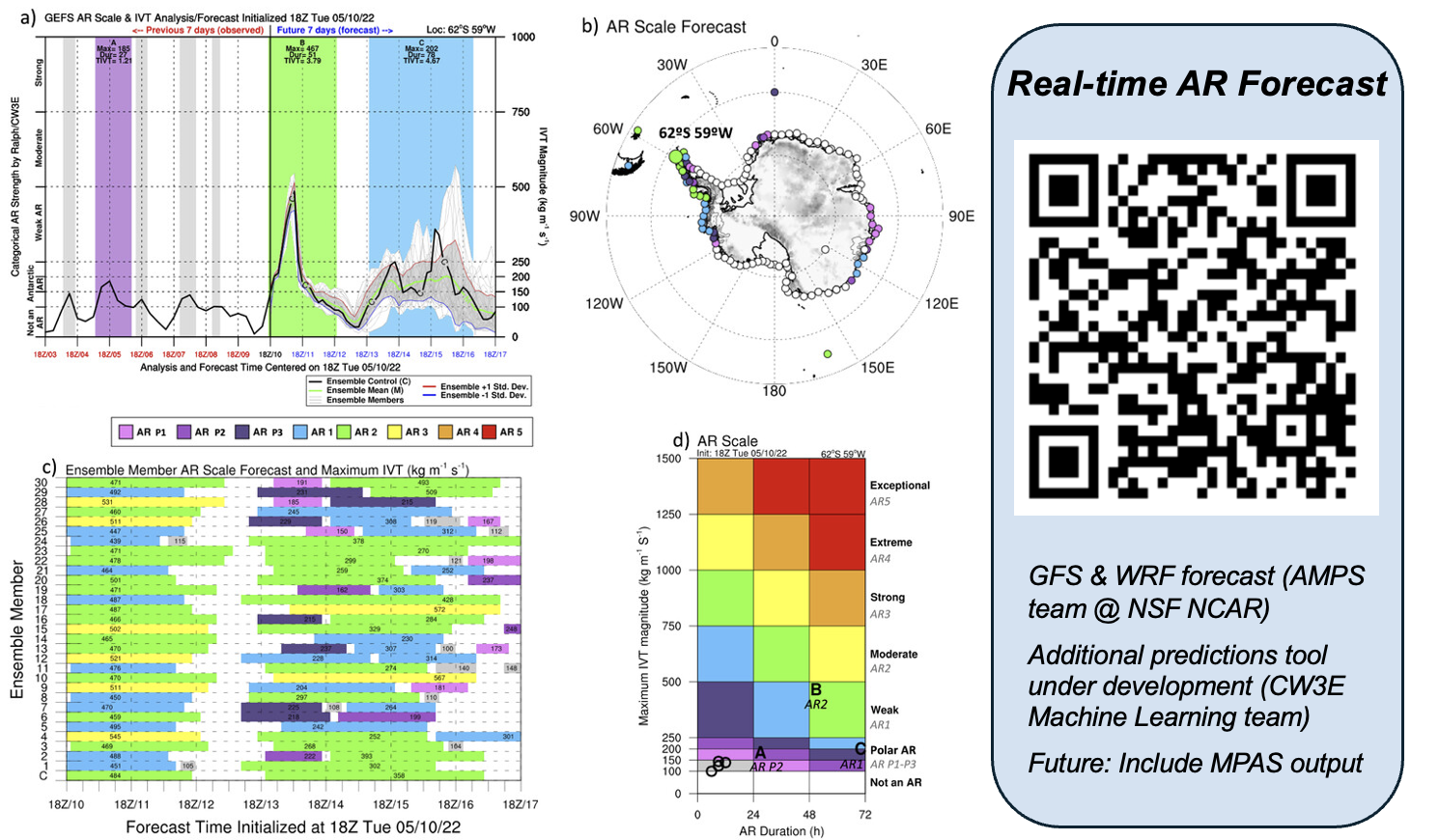
Zhang et al. (2024): "Extending the Center for Western Weather and Water Extremes (CW3E) atmospheric river scale to the polar regions." Cryosphere, 18: 5239–5258, https://doi.org/10.5194/tc-18-5239-2024.
Bromwich et al. (2024b): "Major artifacts in ERA5 2‐m air temperature trends over Antarctica prior to and during the modern satellite era." Geophys. Res. Lett., 51: e2024GL111907, https://doi.org/10.1029/2024GL111907.
Bromwich et al. (2024a): "Winter Targeted Observing Periods during the Year of Polar Prediction in the Southern Hemisphere (YOPP-SH)" Bull. Am. Meteorol. Soc., 105: E1662–E1684, https://doi.org/10.1175/BAMS-D-22-0249.1.
Hansen et al. (2024): "The importance of cloud properties when assessing surface melting in an offline-coupled firn model over Ross Ice shelf, West Antarctica." Cryosphere, 18: 2897–2916, https://doi.org/10.5194/tc-18-2897-2024.
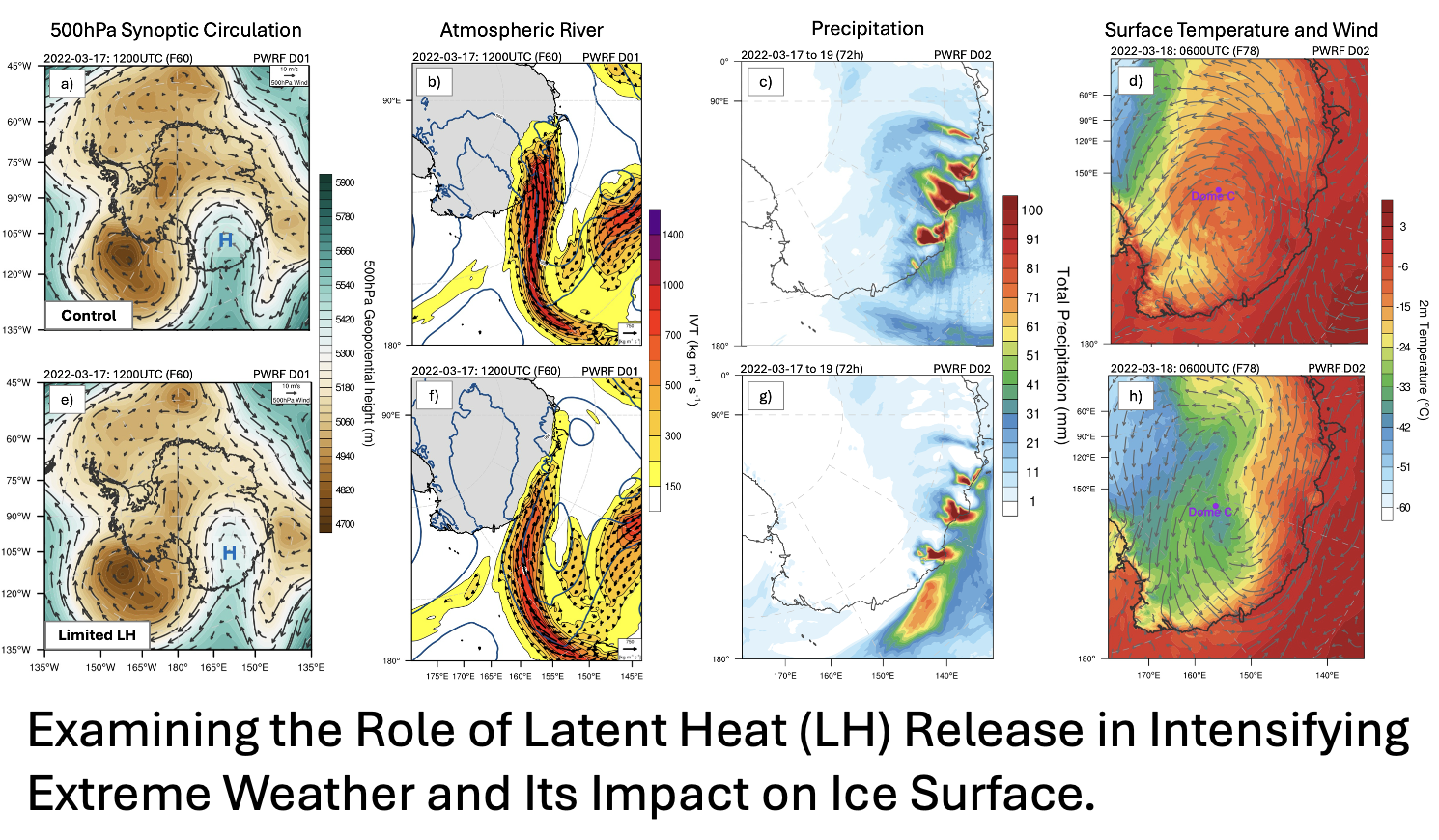
Wille et al. (2024b): "The extraordinary March 2022 East Antarctica 'heat' wave. Part I: observations and meteorological drivers." J. Clim., 37: 757–778, https://doi.org/10.1175/JCLI-D-23-0175.1.
Wille et al. (2024a): "The extraordinary March 2022 East Antarctica 'heat' wave. Part II: impacts on the Antarctic ice sheet." J. Clim., 37: 779–799, https://doi.org/10.1175/JCLI-D-23-0176.1.
Wu et al. (2023): "A long short-term memory neural network-based error estimator for three-dimensional dynamically adaptive mesh generation." Phys. Fluids, 35: 106610, https://doi.org/10.1063/5.0172020.
Gorodetskaya et al. (2023): "Record-high Antarctic Peninsula temperatures and surface melt in February 2022: a compound event with an intense atmospheric river." npj Clim. Atmos. Sci., 6: 202, https://doi.org/10.1038/s41612-023-00529-6.
Orr et al. (2023): "Characteristics of surface 'melt potential' over Antarctic ice shelves based on regional atmospheric model simulations of summer air temperature extremes from 1979/80 to 2018/19." J. Clim., 36: 3357–3383, https://doi.org/10.1175/JCLI-D-22-0386.1.
Cerovečki et al. (2022): "Impact of downward longwave radiative deficits on Antarctic sea-ice extent predictability for subseasonal time scales." Environ. Res. Lett., 17: 084008, https://doi.org/10.1088/1748-9326/ac7d66.
Bromwich et al. (2022b): "Antarctic data impact experiments with Polar WRF during the YOPP-SH summer special observing period." Q. J. Royal Meteorol. Soc., 148: 2194-2218, https://doi.org/10.1002/qj.4298.
Bromwich et al. (2022a): "The 16th Workshop on Antarctic Meteorology and Climate and 6th Year of Polar Prediction in the Southern Hemisphere Meeting." Adv. Atmos. Sci., 39: 536–542, https://doi.org/10.1007/s00376-021-1384-4.
Bromwich et al. (2020): "The Year of Polar Prediction in the Southern Hemisphere (YOPP-SH)." Bull. Am. Meteorol. Soc., 101: E1653–E1676, https://doi.org/10.1175/BAMS-D-19-0255.1.
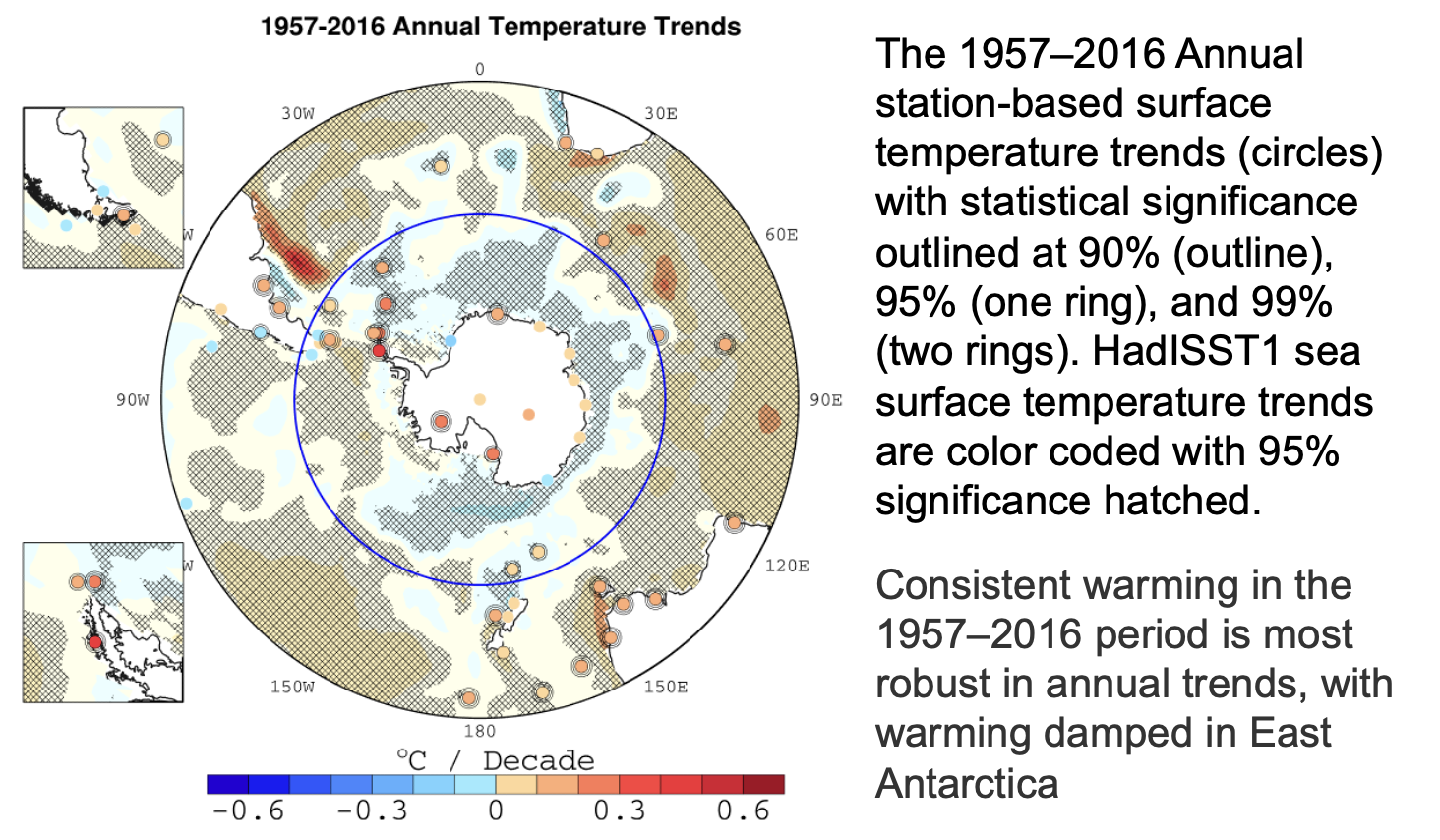
Jones et al. (2019): Sixty Years of Widespread Warming in the Southern Mid- and High-Latitudes (1957- 2016). J. Clim., 32: 6875-6898, https://doi.org/10.1175/JCLI-D-18-0565.1..
Zou et al. (2016): A numerical study on the tropical storm Nangka (2009) based on satellite brightness temperature data assimilation. Journal of the Meteorological Sciences, 36: 366-373, https://doi.org/10.3969/2015jms.0044.
Zou et al. (2015): Effects of High-Impact Weather on Characteristics of Pollutants in Suzhou City. The administration technique of environmental monitoring, 1: 9-13, https://doi.org/10.3969/j.issn.1006-2009.2015.01.003.
Li et al. (2015): Advection errors in an orthogonal terrain-following coordinate: idealized experiments. Chin. Sci. Bull., 60: 3144-3152, https://doi.org/10.1360/N972015-00075.
Wang et al. (2015): Radiosonde Balloon Drift Characteristics and Its Impact on Divergence Calculated through Triangle Method of Three Stations in East China. J. Appl. Meteor. Sci., 26: 319-327, https://doi.org/10.11898/1001-7313.20150307.
Submitted or In Prep
Zou et al. (2026e): "March 2022 East Antarctic heatwave under different background climate conditions" Geophys. Res. Lett. Close to Submission.
(Invited) Zou et al. (2026d): "Chapter 1.2.6 Seasonal Variability in the Antarctic. In Encyclopedia of Climate System Science" S. Nigam, J. A. Carton, M. Collins, A. Gnanadesikan, B. Guan, I. Simpson, C. Tabor, and Z.-L. Yang, Eds.; Academic Press: Oxford. Close to Submission.
O’Brien et al. (2026): "Lessons from Eight Years of the Atmospheric River Tracking Method Intercomparison Project." Bull. Am. Meteorol. Soc. Close to Submission.
Mattingly et al. (2026): "Atmospheric River Tracking Method Intercomparison Project (ARTMIP) polar synthesis." J. Geophys. Res. Atmos. Close to Submission.
*Gan et al. (2026): "Case study of a fully meridional atmospheric river over the Antarctic Peninsula." Atm. Sci. Let. Close to Submission.
*Yang et al. (2026): "Atmospheric river climatology in West Antarctica: direction, landfall location, and surface impacts." J. Geophys. Res. Atmos.C lose to Submission.
Zou et al. (2026g): "Drought Relief along the U.S. East Coast Associated with Atmospheric River Activity." Geophys. Res. Lett. In prep.
Ben et al. (2026): "A diagnostic study of extreme rainfall over western North Carolina associated with Tropical Cyclone Helene during late September 2024." Bull. Am. Meteorol. Soc. In prep.
Zou et al. (2026f): "Impacts of Sea Surface Temperature over the North Pacific Ocean on Atmospheric River Development along the U.S. West Coast." J. Geophys. Res. Atmos. In prep.